$99.99
NAD+ (Nicotinamide Adenine Dinucleotide) is a vital coenzyme involved in cellular energy production and metabolic function. It is widely studied for its role in supporting mitochondrial activity, DNA repair, and overall cellular health in advanced research settings.
NAD+ is a naturally occurring coenzyme found in all living cells, essential for energy metabolism and cellular function. It plays a central role in redox reactions, helping convert nutrients into usable cellular energy. Due to its importance in maintaining cellular health, NAD+ has become a key focus in research related to aging, metabolism, and performance optimization.
NAD+ functions as a critical electron carrier in metabolic pathways, particularly in mitochondrial energy production. It cycles between oxidized (NAD⁺) and reduced (NADH) forms, enabling the transfer of electrons during cellular respiration.
It also activates key enzymes such as sirtuins and PARPs, which are involved in DNA repair, gene expression, and cellular stress responses. Through these pathways, NAD+ supports efficient energy metabolism and helps maintain cellular integrity under stress conditions.
Its role in regulating oxidative stress and mitochondrial function makes it essential for maintaining cellular performance.
NAD+ has gained significant attention in research focused on aging, metabolic health, and cellular repair. Declining NAD+ levels have been associated with reduced mitochondrial efficiency and impaired cellular function, leading to increased interest in supplementation strategies.
Studies explore its role in improving energy metabolism, supporting cognitive function, and enhancing recovery in cellular models. It is also widely researched in longevity science due to its connection with sirtuin activation and age-related cellular decline.
Ongoing research continues to evaluate its applications in metabolic optimization and advanced cellular health studies.
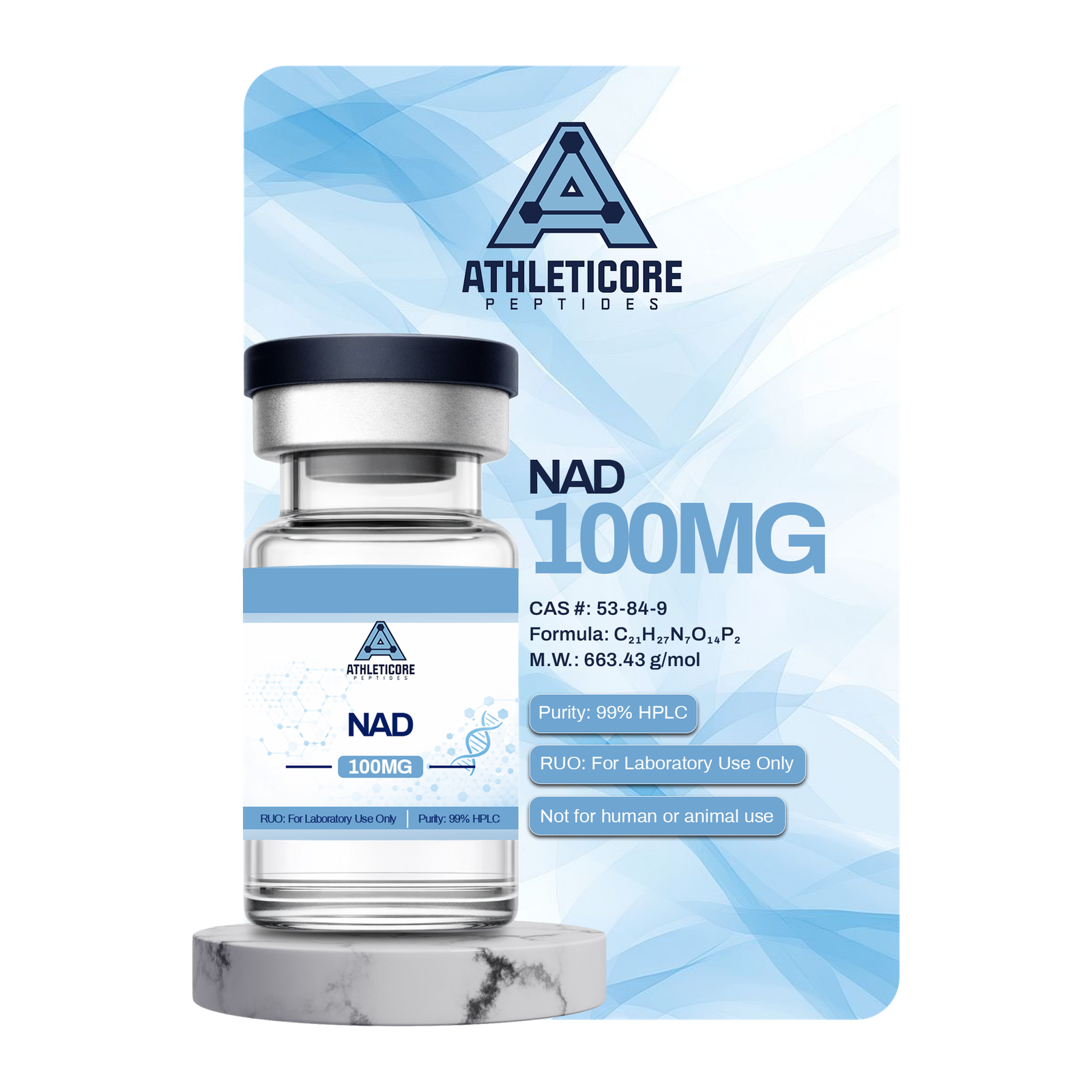
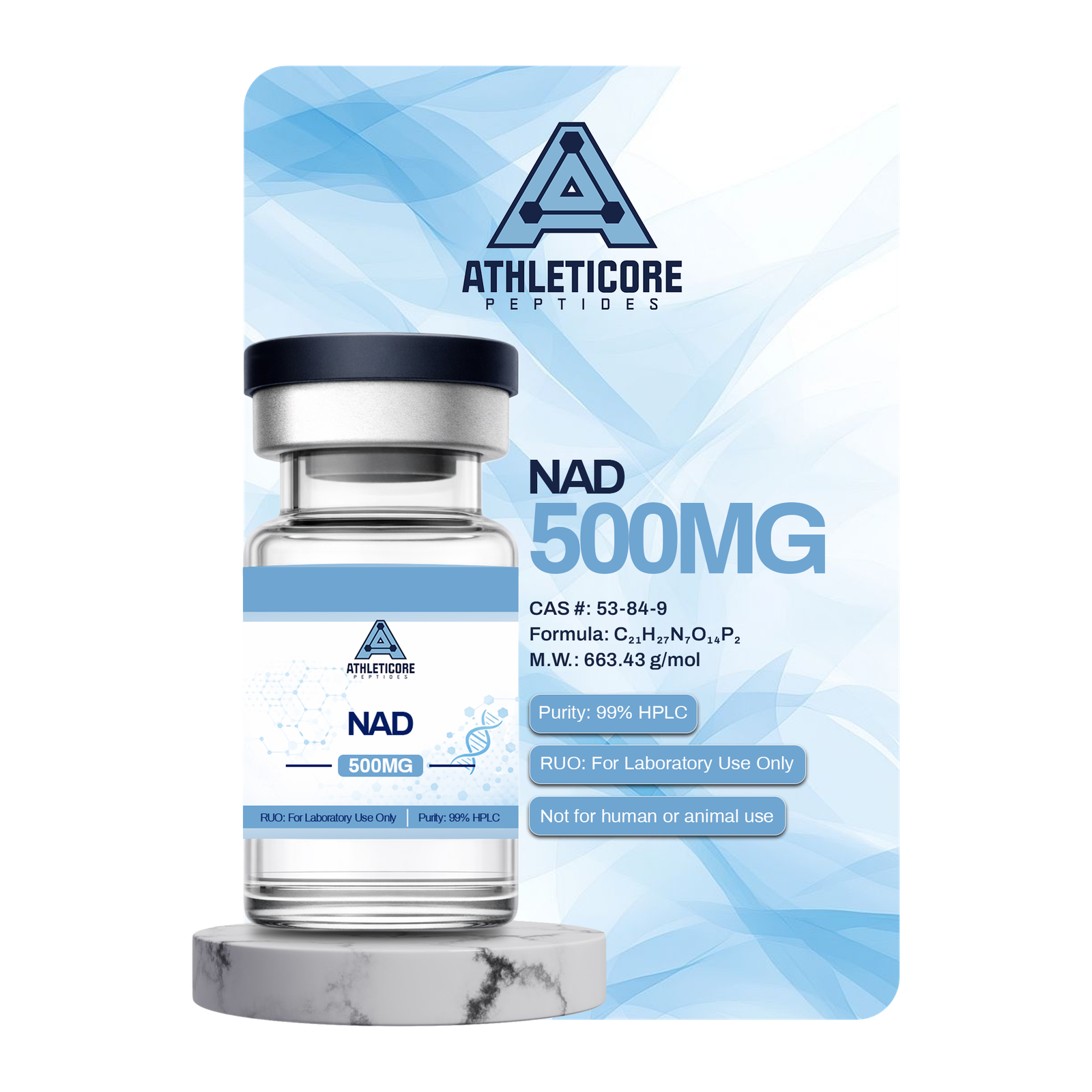
| Strengh | 100mg, 500mg |
|---|
Reviews
There are no reviews yet.