
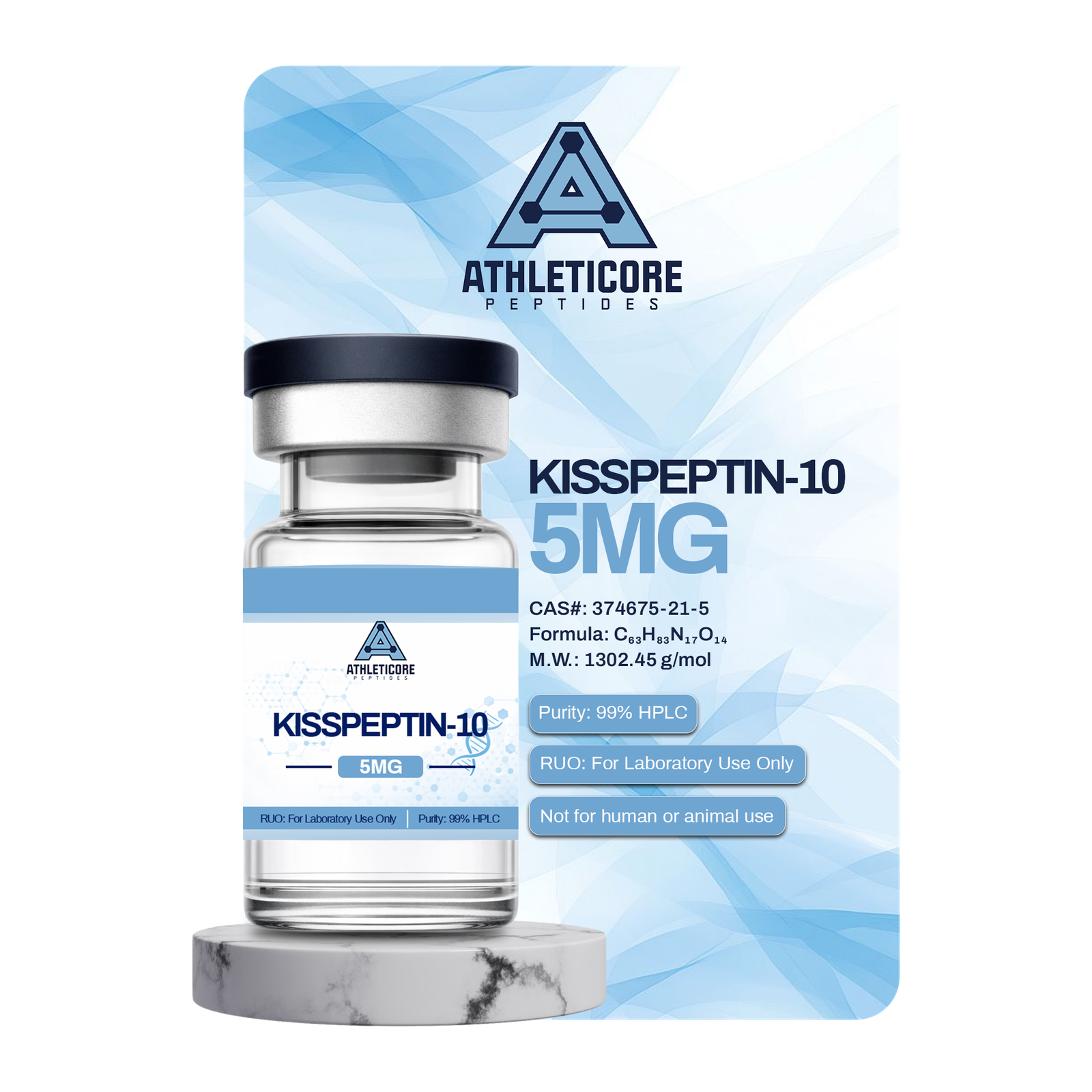
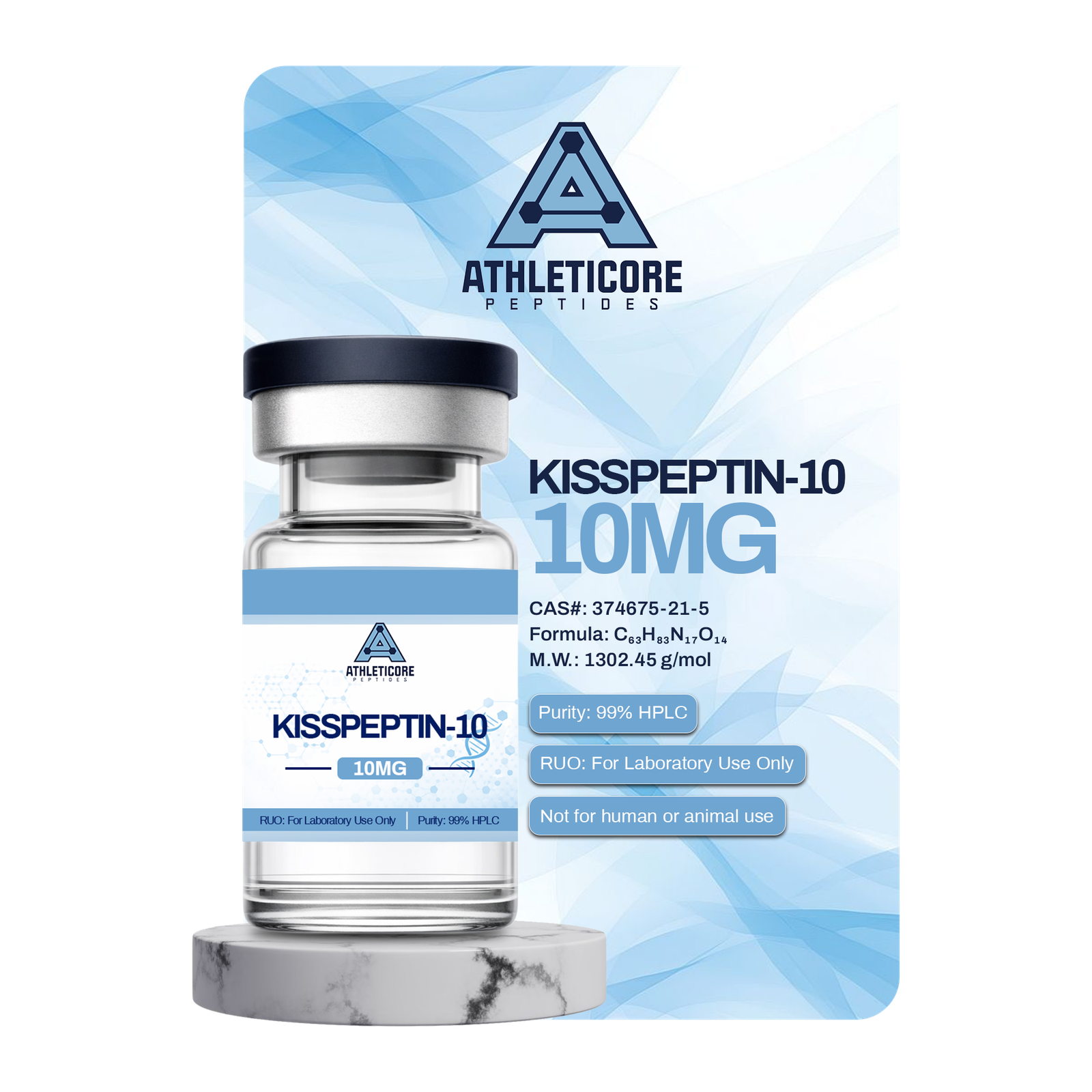
$99.99
Kisspeptin-10 is a bioactive peptide studied for its role in regulating reproductive hormones. It is widely researched for stimulating GnRH release, supporting hormonal balance, and influencing endocrine function.
Kisspeptin-10 is a short peptide fragment derived from the larger kisspeptin protein, which plays a critical role in the regulation of the hypothalamic-pituitary-gonadal (HPG) axis. It is considered a key signaling molecule in reproductive endocrinology, making it a major focus in hormone and fertility research.
Kisspeptin-10 works by binding to the GPR54 receptor in the hypothalamus, triggering the release of gonadotropin-releasing hormone (GnRH). This activation leads to downstream stimulation of luteinizing hormone (LH) and follicle-stimulating hormone (FSH) from the pituitary gland.
These hormones play a central role in regulating reproductive function, testosterone production, and fertility processes.
Through this pathway, Kisspeptin-10 acts as a key upstream regulator of the endocrine system.
Kisspeptin-10 has been extensively studied in reproductive and endocrine research. It is commonly explored in models related to fertility, hormonal imbalance, and puberty regulation.
Research also investigates its potential role in optimizing hormone signaling, improving reproductive function, and supporting endocrine health. Its central role in the HPG axis makes it a critical compound in advanced hormone research.
Ongoing studies continue to evaluate its broader applications in reproductive biology and hormonal optimization.
| Strengh | 5mg, 10mg |
|---|
Reviews
There are no reviews yet.