
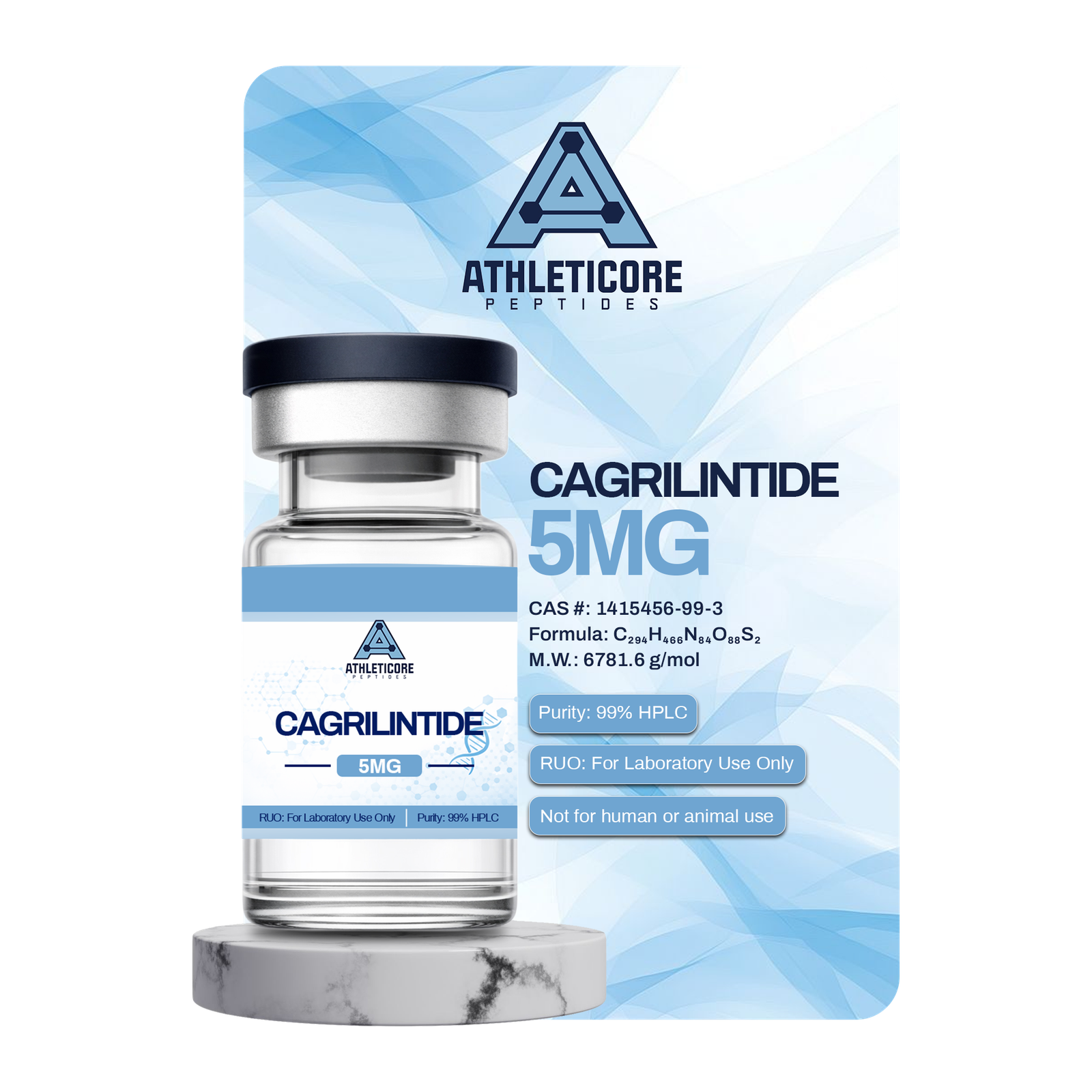
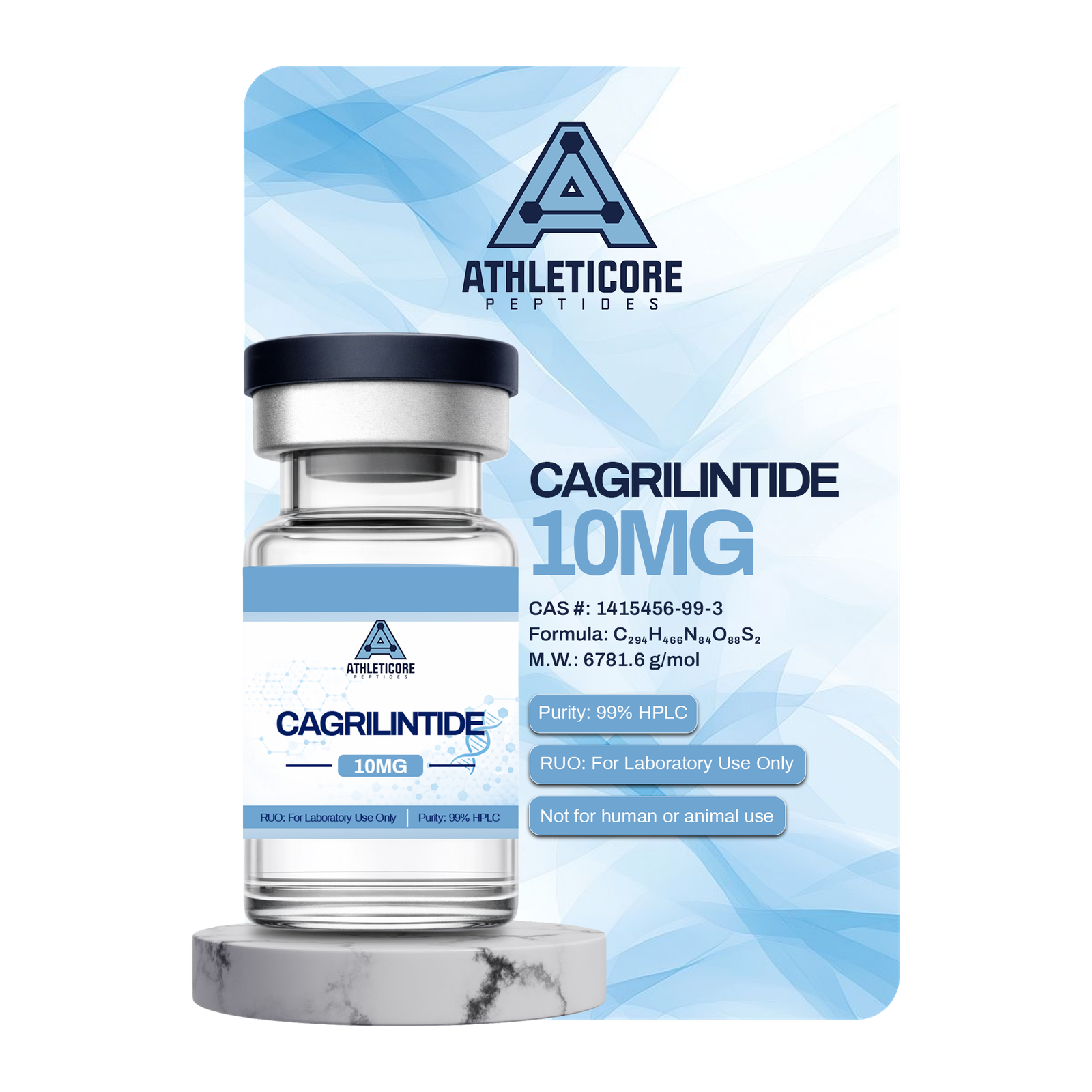
$99.99
Cagrilintide is a long-acting amylin analog studied for its role in appetite regulation and metabolic control. It is widely researched for supporting satiety, reducing food intake, and influencing weight management pathways.
Cagrilintide is a synthetic peptide designed to mimic amylin, a hormone co-secreted with insulin that plays a key role in regulating appetite and digestion. Engineered for extended activity, it has become a major focus in metabolic and obesity research, particularly in combination strategies with GLP-1 receptor agonists.
Cagrilintide works by activating amylin receptors, which play a key role in signaling satiety to the brain. This helps reduce appetite and overall caloric intake in research models.
It also slows gastric emptying, contributing to prolonged fullness after meals. Additionally, it influences central nervous system pathways involved in energy balance and feeding behavior.
These combined effects support improved appetite control and metabolic regulation.
Cagrilintide has been extensively studied in obesity and metabolic research, particularly for its ability to reduce food intake and support weight management. It is often explored in combination with GLP-1 receptor agonists like Semaglutide for enhanced metabolic effects.
Research also investigates its impact on long-term weight control, metabolic efficiency, and behavioral aspects of eating. Its extended duration of action makes it a promising candidate in next-generation metabolic therapies.
Ongoing studies continue to evaluate its broader applications in appetite regulation and metabolic optimization.
| Strengh | 5mg, 10mg |
|---|
Reviews
There are no reviews yet.