$99.00
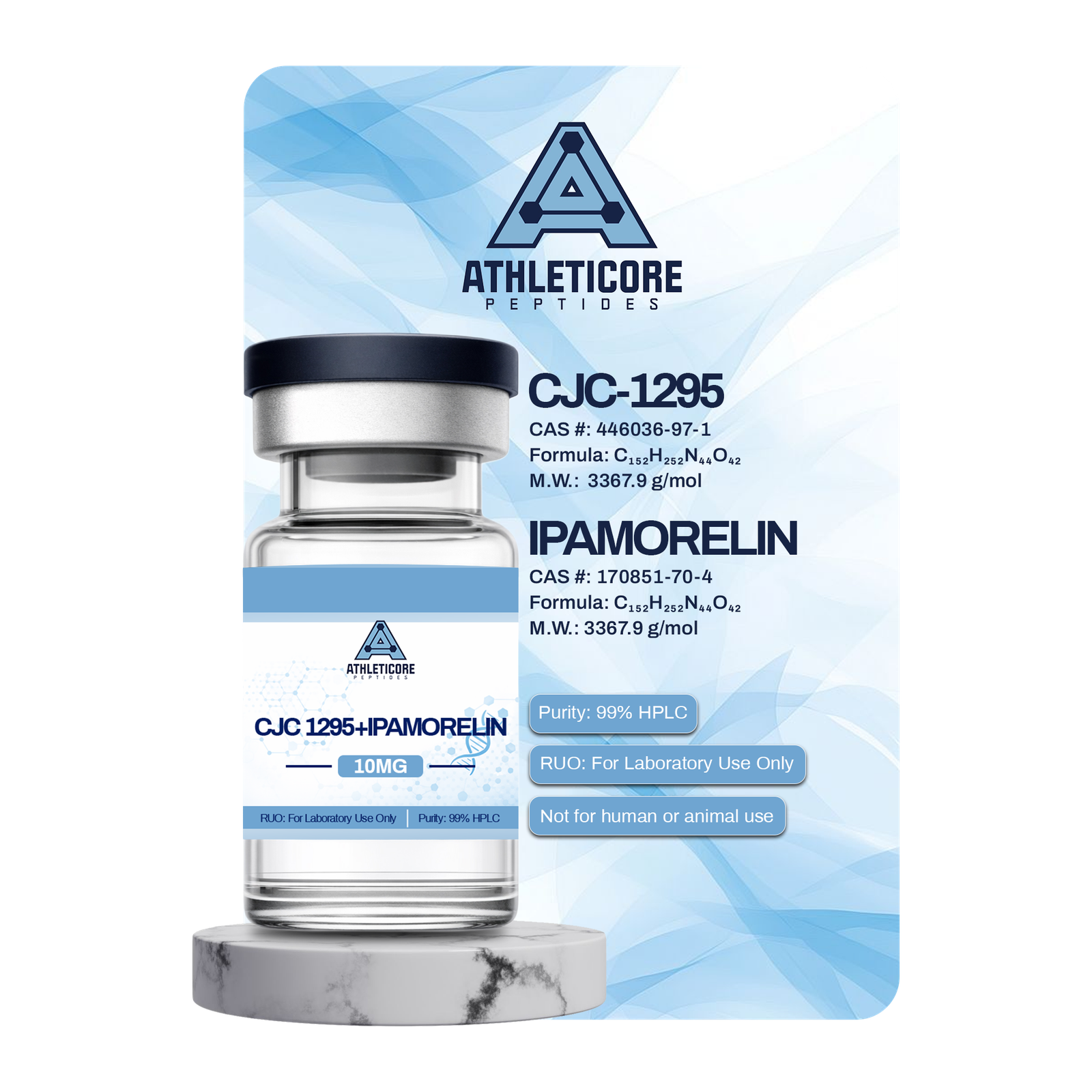
CJC-1295 & Ipamorelin is a peptide stack studied for its role in stimulating growth hormone release. It is widely researched for supporting recovery, improving sleep quality, and enhancing muscle repair through natural GH secretion pathways.
CJC-1295 and Ipamorelin are often combined in research to create a synergistic effect on growth hormone (GH) release. CJC-1295 acts as a growth hormone-releasing hormone (GHRH) analog, while Ipamorelin functions as a ghrelin receptor agonist. Together, they promote a more consistent and controlled stimulation of GH secretion, making this stack a popular focus in performance and recovery research.
CJC-1295 stimulates the pituitary gland to increase natural growth hormone production by mimicking GHRH. Depending on the version (DAC or no DAC), it may provide extended or pulsatile GH release.
Ipamorelin complements this effect by activating ghrelin receptors, further enhancing GH secretion without significantly affecting cortisol or prolactin levels in research models.
When combined, these peptides create a more efficient and sustained GH release pattern, supporting recovery, tissue repair, and metabolic activity.
The CJC-1295 and Ipamorelin stack is widely studied in research related to muscle recovery, fat metabolism, and sleep optimization. It is often explored for its ability to promote lean tissue development and improve recovery timelines in performance-focused studies.
Research also investigates its effects on aging, hormonal balance, and overall physical performance. Its synergistic action makes it a key compound combination in advanced peptide protocols.
Ongoing studies continue to evaluate its broader applications in recovery science and metabolic health.
Reviews
There are no reviews yet.