
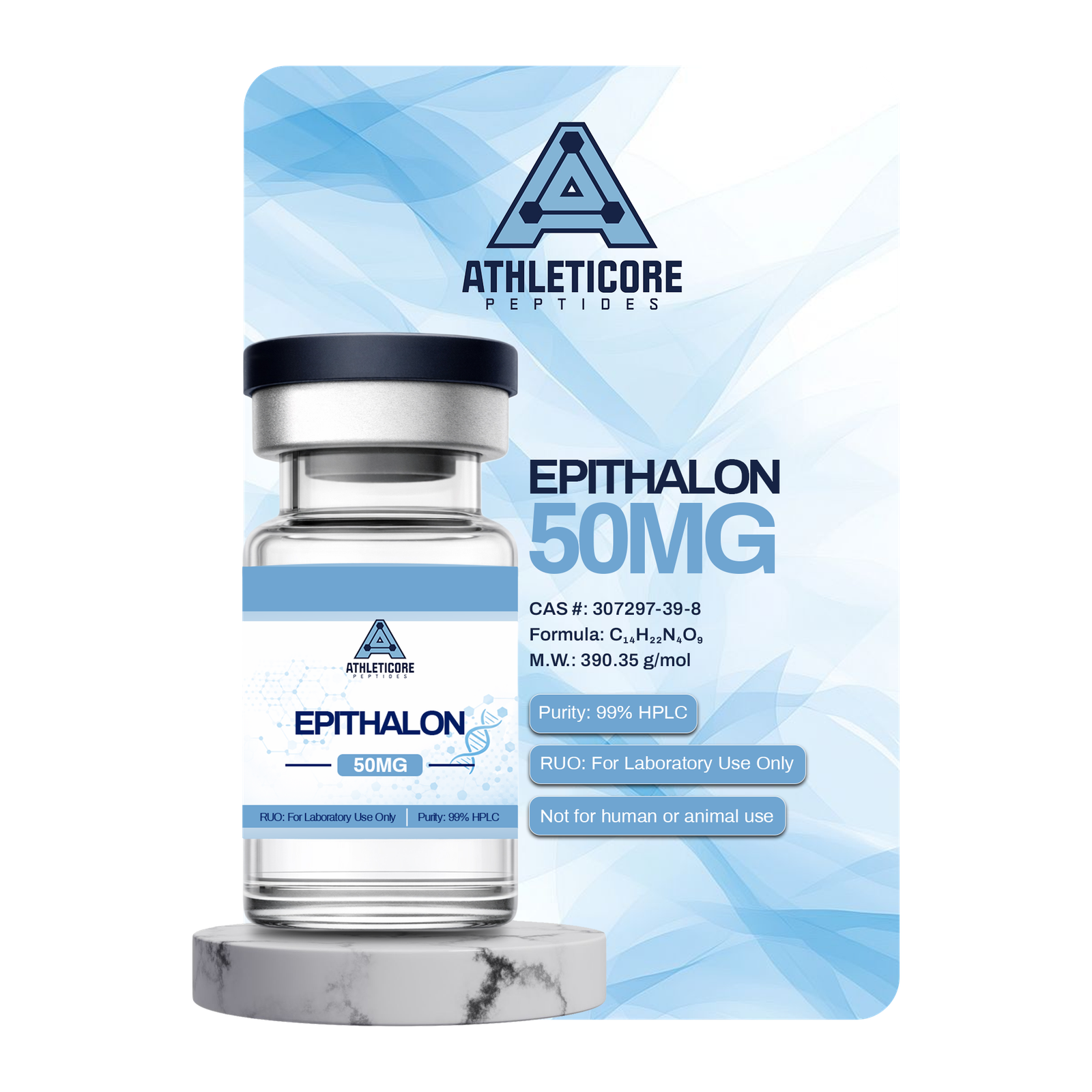
$99.00
Epithalon is a synthetic tetrapeptide studied for its role in cellular aging and longevity research. It is widely explored for its potential to support telomere maintenance, regulate circadian rhythms, and promote overall cellular stability.
Epithalon, also known as Epitalon, is a synthetic peptide derived from the naturally occurring pineal peptide epithalamin. It has gained attention in longevity and anti-aging research due to its potential influence on cellular lifespan and biological rhythms. Its unique interaction with cellular aging pathways makes it a key focus in advanced peptide studies.
Epithalon is studied for its ability to influence telomerase activity, the enzyme responsible for maintaining telomere length. By supporting telomere stability, it may contribute to prolonged cellular lifespan and improved cell function.
It is also associated with the regulation of circadian rhythms through its interaction with the pineal gland, potentially influencing melatonin production and sleep-wake cycles.
Additionally, Epithalon may support antioxidant defenses and help regulate gene expression linked to aging and cellular repair.
Epithalon has been extensively studied in longevity and aging research, particularly in Eastern European scientific literature. Studies explore its effects on lifespan extension, cellular aging markers, and overall physiological balance.
It is also investigated for its role in sleep regulation, immune support, and age-related cellular decline. Its connection to telomere biology makes it a significant compound in advanced anti-aging research.
Ongoing research continues to evaluate its broader applications in longevity science and cellular health optimization.
Reviews
There are no reviews yet.