
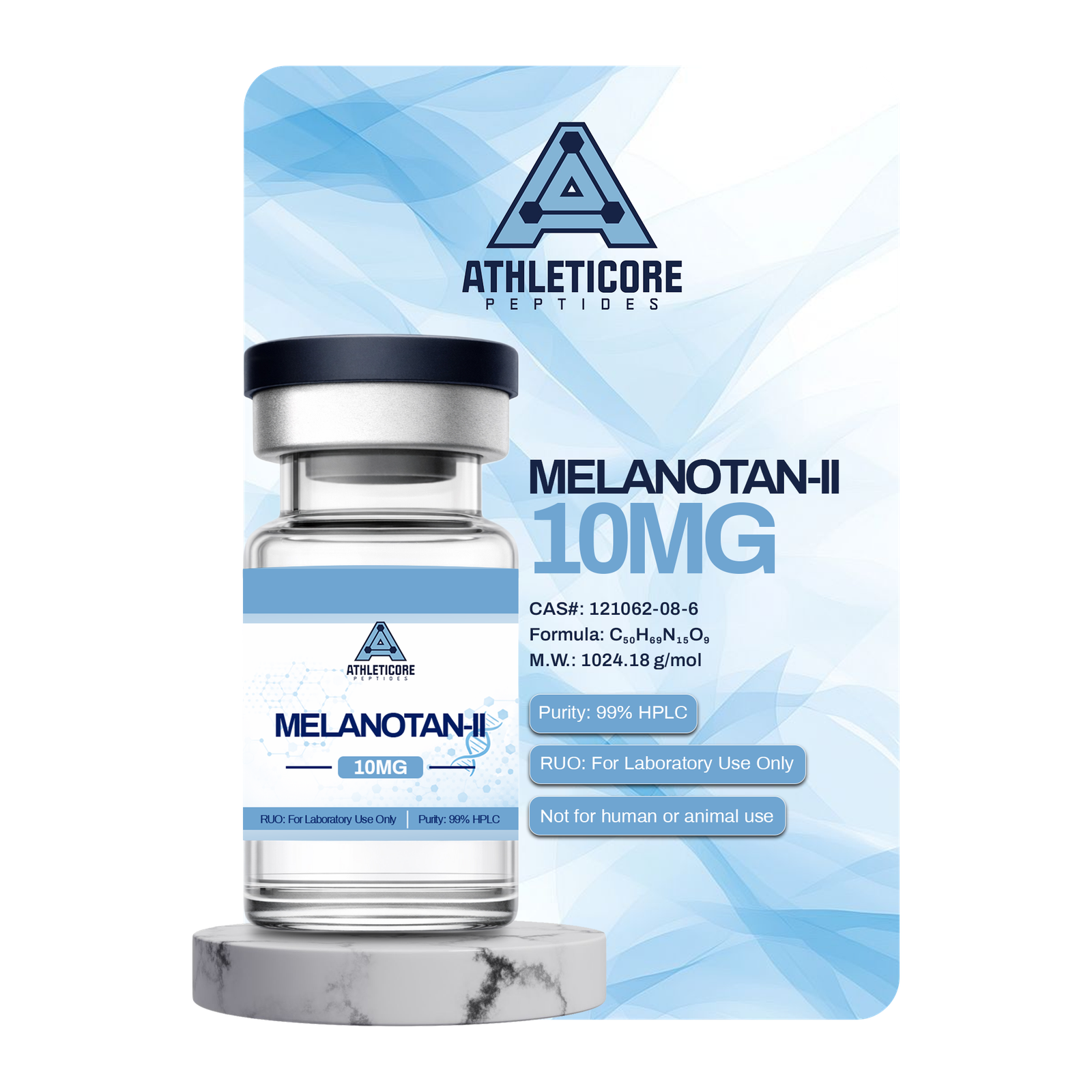
$99.00
Melanotan I is a synthetic analogue of α-MSH studied for its role in stimulating melanin production. It is widely researched for controlled pigmentation response, photoprotection mechanisms, and selective activation of melanocortin receptors.
Melanotan I, also known as afamelanotide, is a synthetic peptide designed to mimic the activity of alpha-melanocyte-stimulating hormone (α-MSH). It primarily targets melanocortin receptors involved in skin pigmentation. Compared to other analogues, it is known for its more selective receptor activity, making it a key subject in dermatological and photobiology research.
Melanotan I works by selectively binding to the MC1R receptor on melanocytes. Activation of this receptor stimulates melanin synthesis, leading to increased pigmentation.
Its higher selectivity for MC1R, compared to other melanocortin receptors, results in a more targeted effect on skin pigmentation pathways with reduced off-target receptor interaction.
This targeted mechanism makes it valuable in studying pigmentation control and photoprotective responses.
Melanotan I has been extensively studied in dermatological research, particularly in areas related to pigmentation disorders and UV protection. It is investigated for its ability to increase melanin levels, which may contribute to enhanced natural defense against UV radiation in controlled models.
Research also explores its role in conditions associated with photosensitivity and its potential use in regulated therapeutic environments.
Ongoing studies continue to evaluate its broader applications in skin biology and controlled pigmentation research.
Reviews
There are no reviews yet.