
$99.00
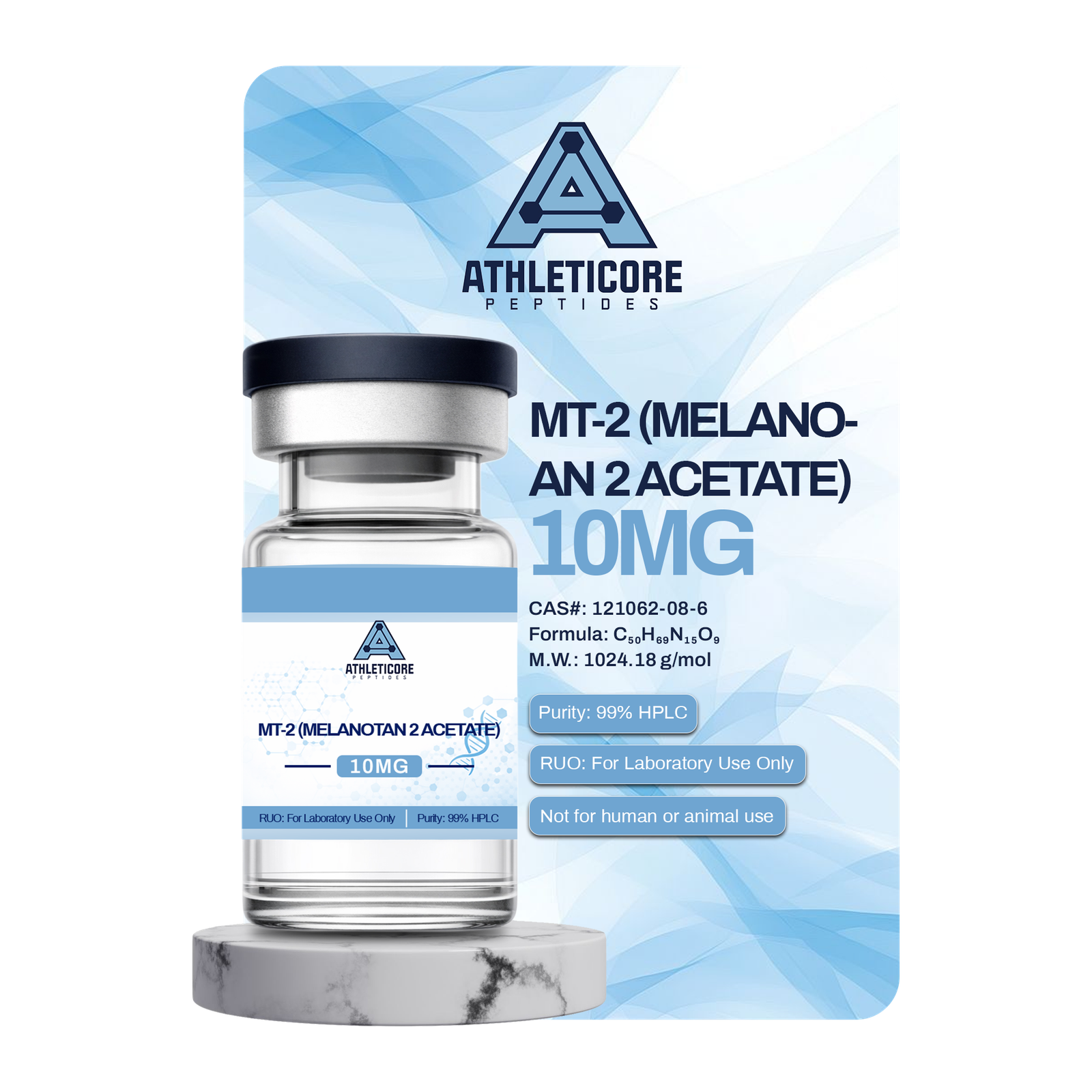
Melanotan II is a synthetic melanocortin peptide studied for its role in stimulating melanin production. It is widely researched for pigmentation response, UV-independent tanning mechanisms, and its interaction with melanocortin receptors.
Melanotan II is a lab-engineered analogue of the naturally occurring hormone α-MSH (alpha-melanocyte-stimulating hormone). It is designed to interact with melanocortin receptors in the body, influencing pigmentation pathways and other physiological responses. Due to its targeted receptor activity, it has become a focus of research in dermatology and peptide science.
Melanotan II works by binding to melanocortin receptors, particularly MC1R, which plays a central role in melanin synthesis. Activation of this receptor stimulates melanocytes to produce melanin, leading to increased pigmentation.
It also interacts with other melanocortin receptors such as MC3R and MC4R, which are involved in appetite regulation and other physiological pathways.
Through receptor activation, Melanotan II influences pigmentation processes independent of direct UV exposure, making it a key subject in pigmentation and receptor biology research.
Melanotan II has been widely studied in research related to skin pigmentation, UV protection models, and melanocortin system activity. It is often explored for its ability to induce melanin production without prolonged sun exposure.
Research also investigates its broader physiological effects due to its interaction with multiple melanocortin receptors. These include studies in metabolic regulation, appetite signaling, and behavioral responses.
Ongoing studies continue to examine its potential applications and safety profile within controlled research environments.
Reviews
There are no reviews yet.