
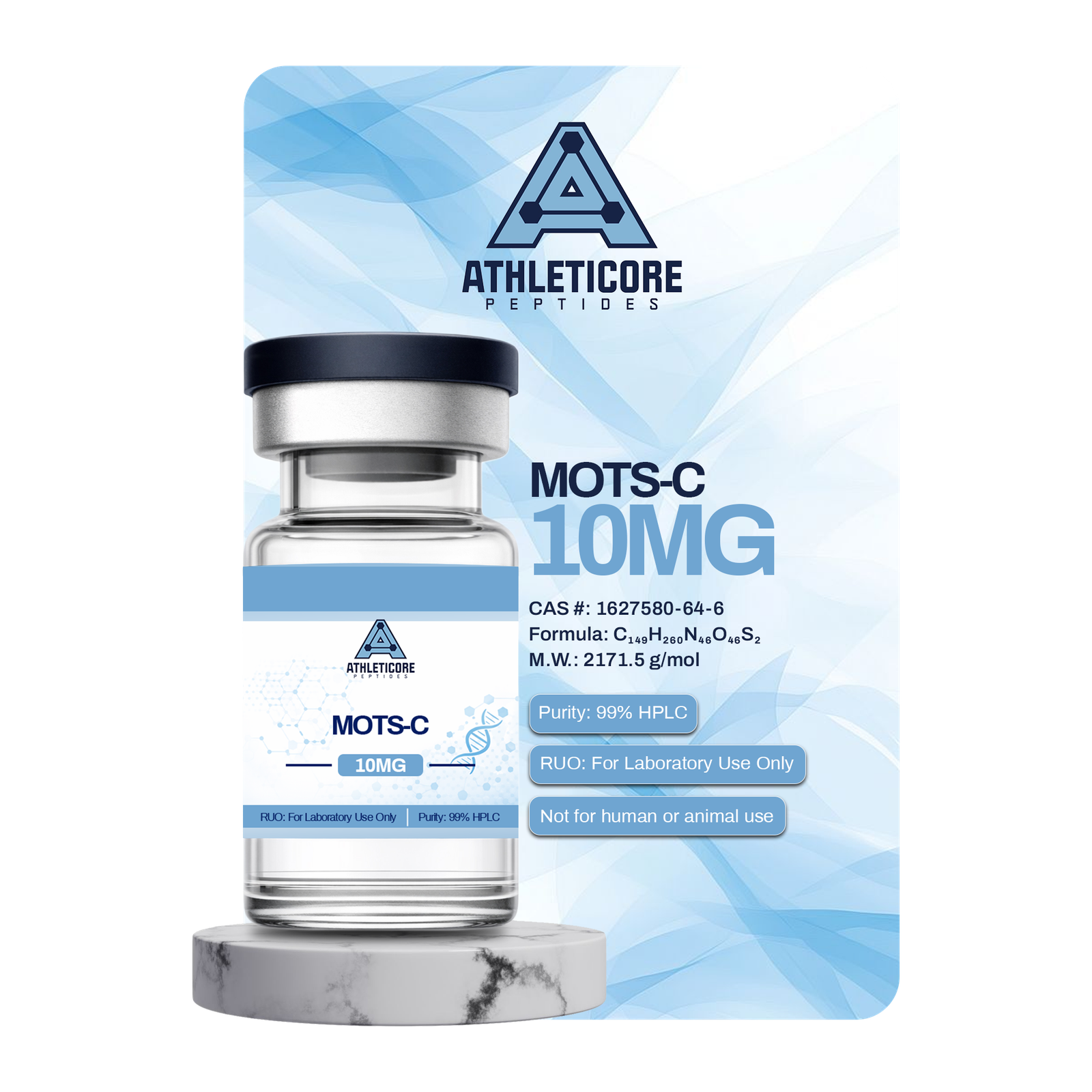
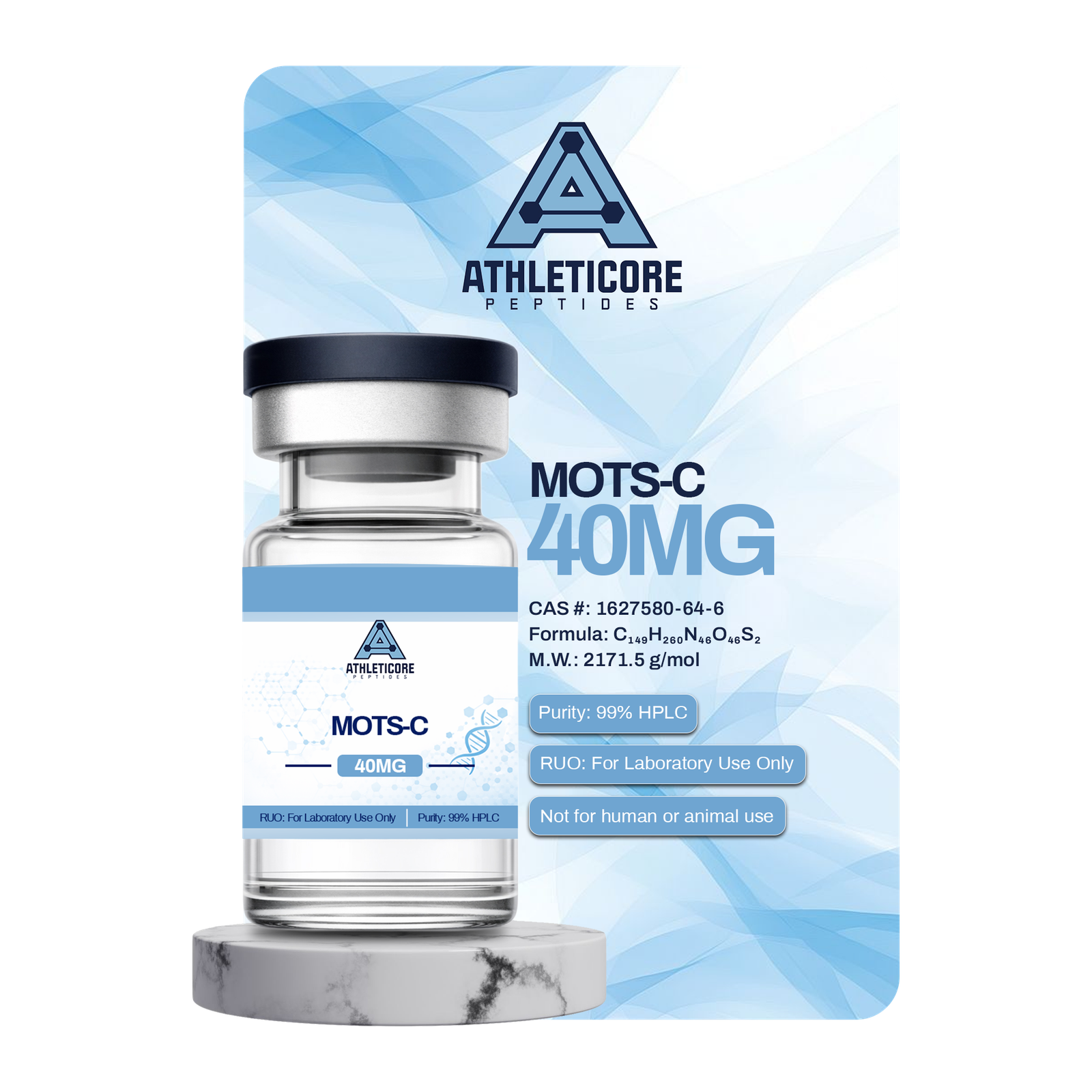
$99.99
MOTS-c is a mitochondrial-derived peptide studied for its role in metabolic regulation and cellular energy balance. It is widely researched for its potential to enhance glucose utilization, improve metabolic flexibility, and support overall cellular performance.
MOTS-c is a naturally occurring peptide encoded within mitochondrial DNA, making it unique among bioactive compounds. It plays a key role in cellular metabolism and energy regulation, particularly in response to metabolic stress. Due to its connection with mitochondrial function, MOTS-c has become a major focus in research related to metabolic health, endurance, and aging.
MOTS-c regulates metabolic pathways by influencing cellular energy sensing systems, particularly the AMPK (AMP-activated protein kinase) pathway. Activation of AMPK helps improve glucose uptake and fatty acid oxidation, promoting efficient energy utilization.
It also plays a role in cellular stress adaptation by translocating to the nucleus under metabolic stress conditions, where it helps regulate gene expression related to metabolism.
Through these mechanisms, MOTS-c supports improved metabolic balance and cellular efficiency.
MOTS-c has been extensively studied in metabolic and aging research. It is of particular interest in studies related to insulin sensitivity, obesity models, and exercise physiology.
Research suggests its involvement in enhancing metabolic flexibility and improving energy efficiency at the cellular level. It has also been explored for its potential role in age-related metabolic decline and physical performance optimization.
Ongoing studies continue to investigate its broader applications in metabolic health and mitochondrial function.
| Strengh | 10mg, 40mg |
|---|
Reviews
There are no reviews yet.